Concealed Light (Round Panel) Cutting Size Chart: 3W to 20W in mm and Inches
By WireBolt Team · Updated · 4 min read
Quick answer
Round LED panel lights need a cut-out of about 76 mm (3 inch) for 3W, 100 mm (4 inch) for 5W to 10W, 145 mm (about 5.7 inch) for 12W, 150 mm (6 inch) for 15W and 205 mm (8 inch) for 20W, using Panasonic Anora Slim as the example. The panel rim is wider than the hole and hides the edge. Sizes differ by a few millimetres between brands, so always check the cut-out printed on the box before cutting the false ceiling.
Round LED panel lights, often called concealed lights, are the most common ceiling light in new Bengaluru homes with false ceilings. Getting them right comes down to one number: the cut-out size, the hole cut in the gypsum or POP ceiling. Cut it too small and the panel won't go in; cut it too big and the rim can't hide the edge. Here are the sizes, which wattage to use where, and how to cut the hole cleanly.
Round panel light cutting size chart
Sizes below are for the Panasonic Anora Slim round panels, a popular slim range about 28 mm deep. Other brands are close but can differ by a few millimetres.
| Wattage | Cut-out (mm) | Cut-out (inches) | Panel size (across) | Typical use |
|---|---|---|---|---|
| 3W | 76 mm | about 3 inch | 99 mm | Wardrobes, niches, accent points |
| 5W | 100 mm | about 4 inch | 116 mm | Passages, small bathrooms |
| 6W | 100 mm | about 4 inch | 116 mm | Bathrooms, passages, balconies |
| 10W | 100 mm | about 4 inch | 116 mm | Bathrooms, small rooms, study corners |
| 12W | 145 mm | about 5.7 inch | 153 mm | Bedrooms, kitchens, smaller halls |
| 15W | 150 mm | about 6 inch | 165 mm | Bedrooms, kitchens, halls |
| 20W | 205 mm | about 8 inch | 220 mm | Large halls, shops, offices |
Always check the cut-out printed on the box before you cut. Some wattages come in two slightly different sizes, and the box is the final word.
Why 6W and 10W share the same hole
6W and 10W round panels usually share the same body (about 116 mm across) and the same 100 mm (4 inch) cut-out. So you can change your mind on brightness after the ceiling is cut, or use 6W in a bathroom and 10W in a study with the same hole size.
Which wattage for which room?
These are rules of thumb for a standard 9 to 10 foot ceiling; your electrician or interior designer will fine-tune the layout.
- Wardrobes, niches and accent points: 3W.
- Passages, balconies and small bathrooms: 5W to 6W.
- Bathrooms, small rooms and study corners: 6W to 10W.
- Bedrooms and kitchens: 12W to 15W, two to four in a larger room rather than one bright light in the middle.
- Living rooms and halls: 15W around the room, 20W for very large halls.
- Shops and offices: 15W to 20W in an even grid.
Warm, natural or cool white?
- Warm white (3000K): cosy and relaxed, for bedrooms and living rooms.
- Natural white (4000K): balanced, for kitchens, dining and study areas.
- Cool white (6500K): bright and crisp, for offices, shops and work areas.
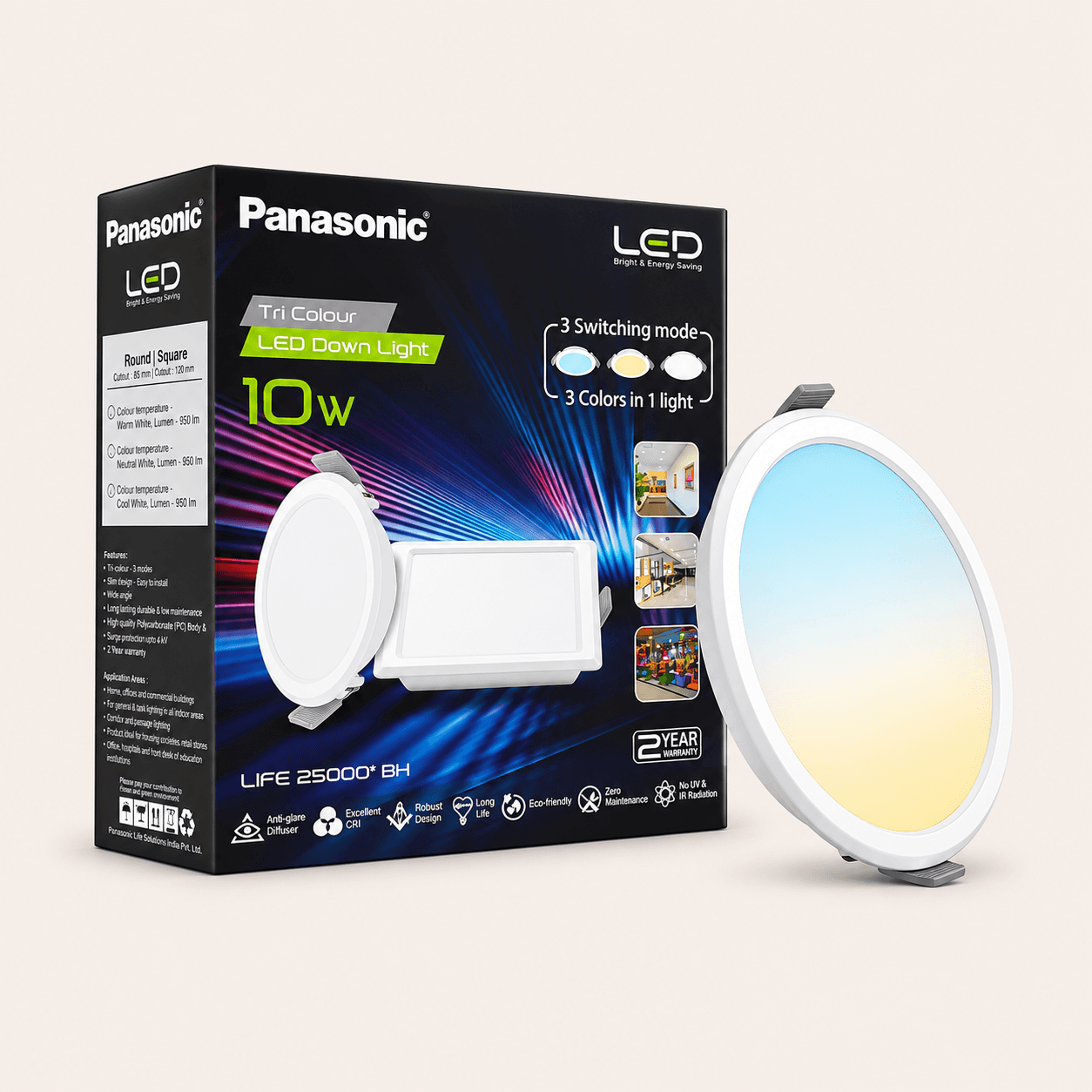
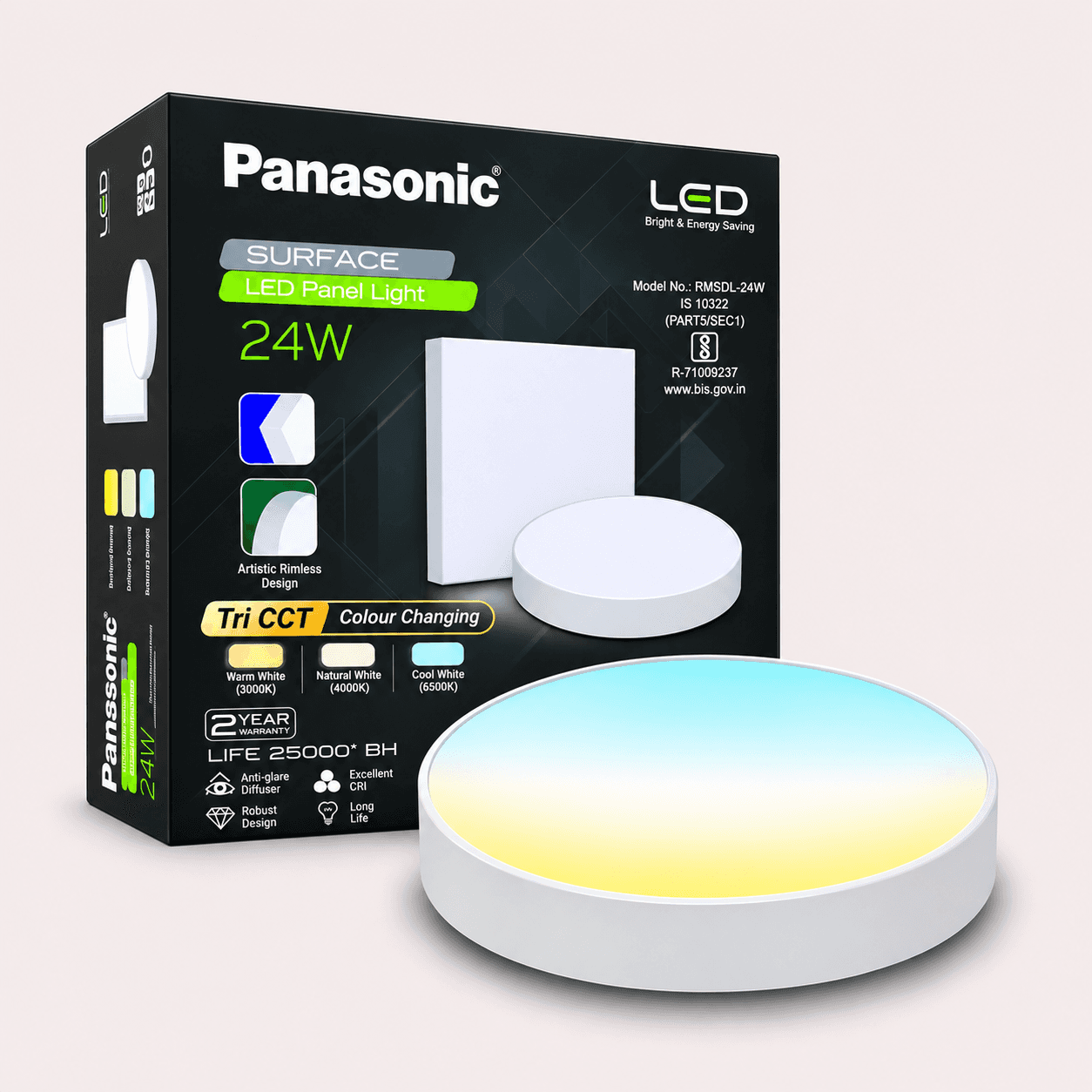
If you can't decide, a 3-in-1 (Tri-CCT) panel such as the Panasonic Anora Slim Tri-CCT gives all three. You change the colour by switching the light off and on with the normal wall switch, with no remote or extra wiring.
How to cut the hole cleanly
- Mark the centre of each light on the false ceiling from the lighting layout, keeping panels in neat lines.
- Check the cut-out on the box, then mark the circle or set your tool to that size.
- Use a hole saw or a circle cutter of the right size (3, 4, 6 or 8 inch) for clean edges on gypsum. A rough, oversized hole is the most common mistake.
- Bring the wire through before fitting, connect it to the panel's terminal, then push the spring clips up and press the panel into the hole.
- Fit all panels before the final coat of paint touch-up, so any marks around the rim can be painted over.
Common mistakes
- Cutting before the panels arrive. Cut-outs differ between brands; cut only after checking the box.
- One big light in the middle of the room. Several 15W panels spread around give more even light with fewer shadows.
- Mixing colours in one room. Keep every panel in a room the same colour temperature, or use 3-in-1 panels throughout.
- Too shallow a ceiling gap. Slim panels like the Anora Slim are about 28 mm deep, but leave room for the wire and the connector above the board.
No false ceiling? Use a surface light
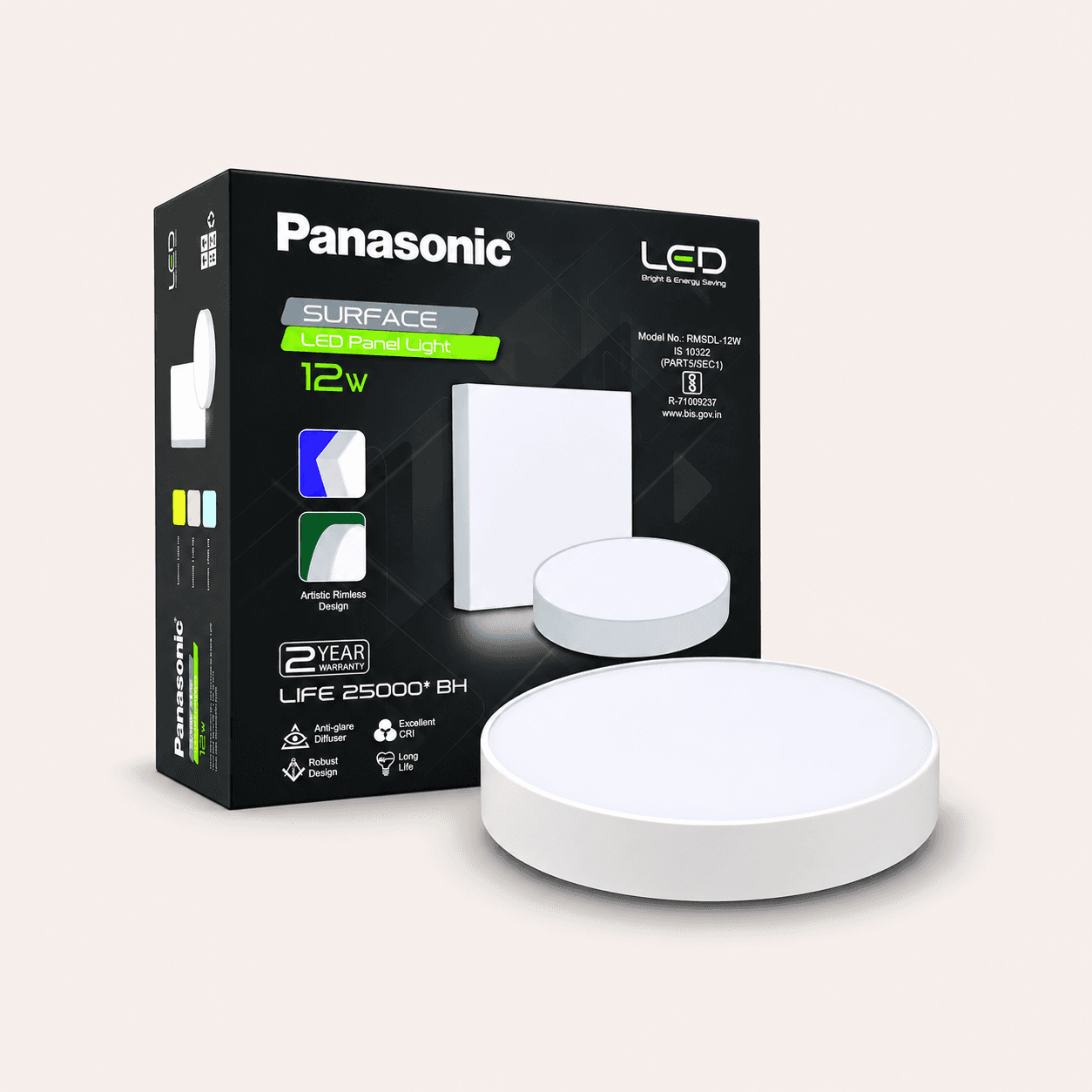
Concealed lights need a hollow false ceiling to sit in. On a plain concrete ceiling, a surface light screws straight onto the ceiling with no cut-out at all, for example the Panasonic Rimless Surface round light, 6W to 24W. See concealed light vs surface light to choose, and how 3-in-1 panel lights work if you want warm, natural and cool white in one light.
Get the panels on site the same day
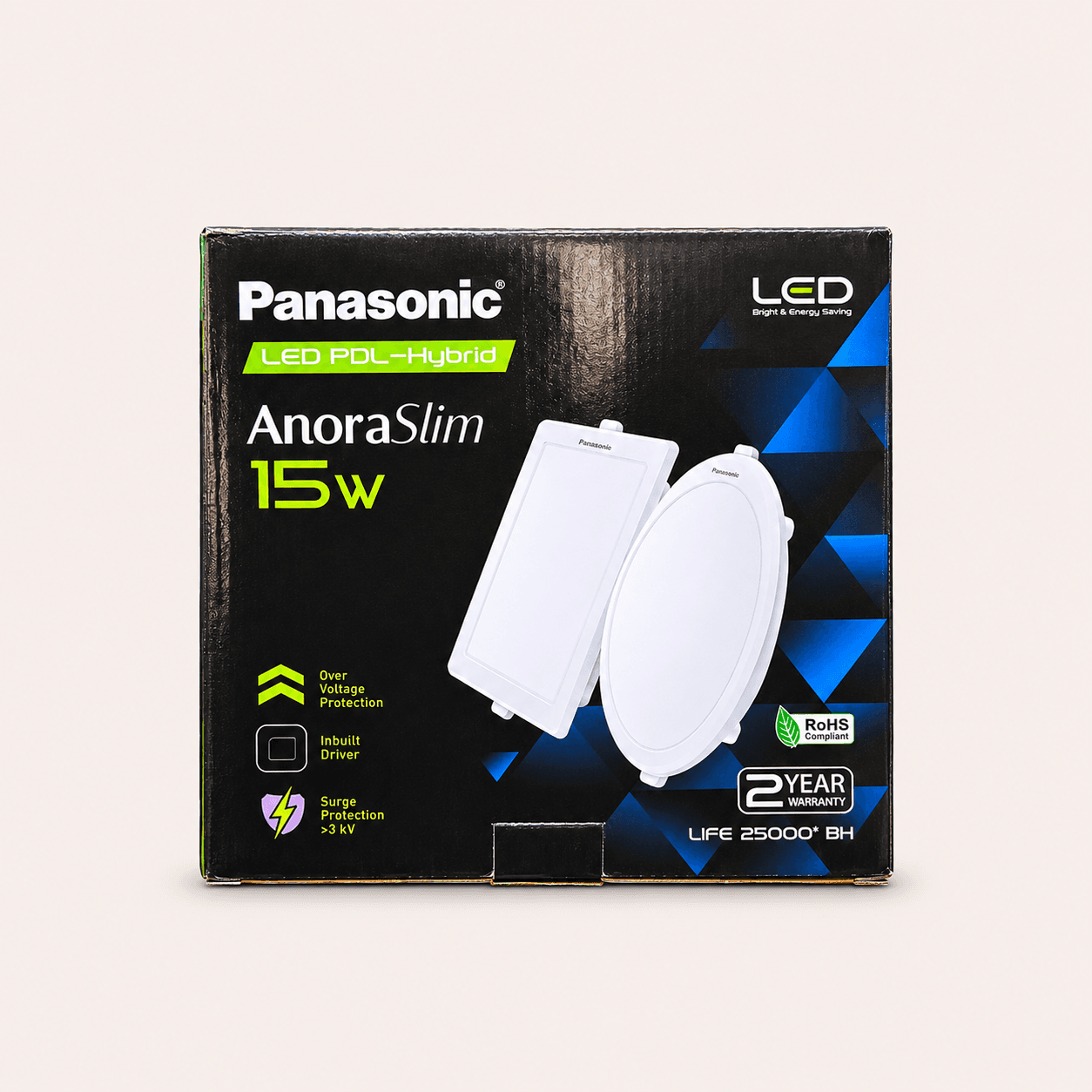
WireBolt delivers original Panasonic Anora Slim round panel lights across Bengaluru the same day, with a GST invoice on every order, so the false ceiling work isn't held up waiting for lights.
This guide is general information for homes in Bengaluru. Electrical work should be done by a licensed electrician who can check your actual load, wiring and supply. Last checked 28 November 2026.