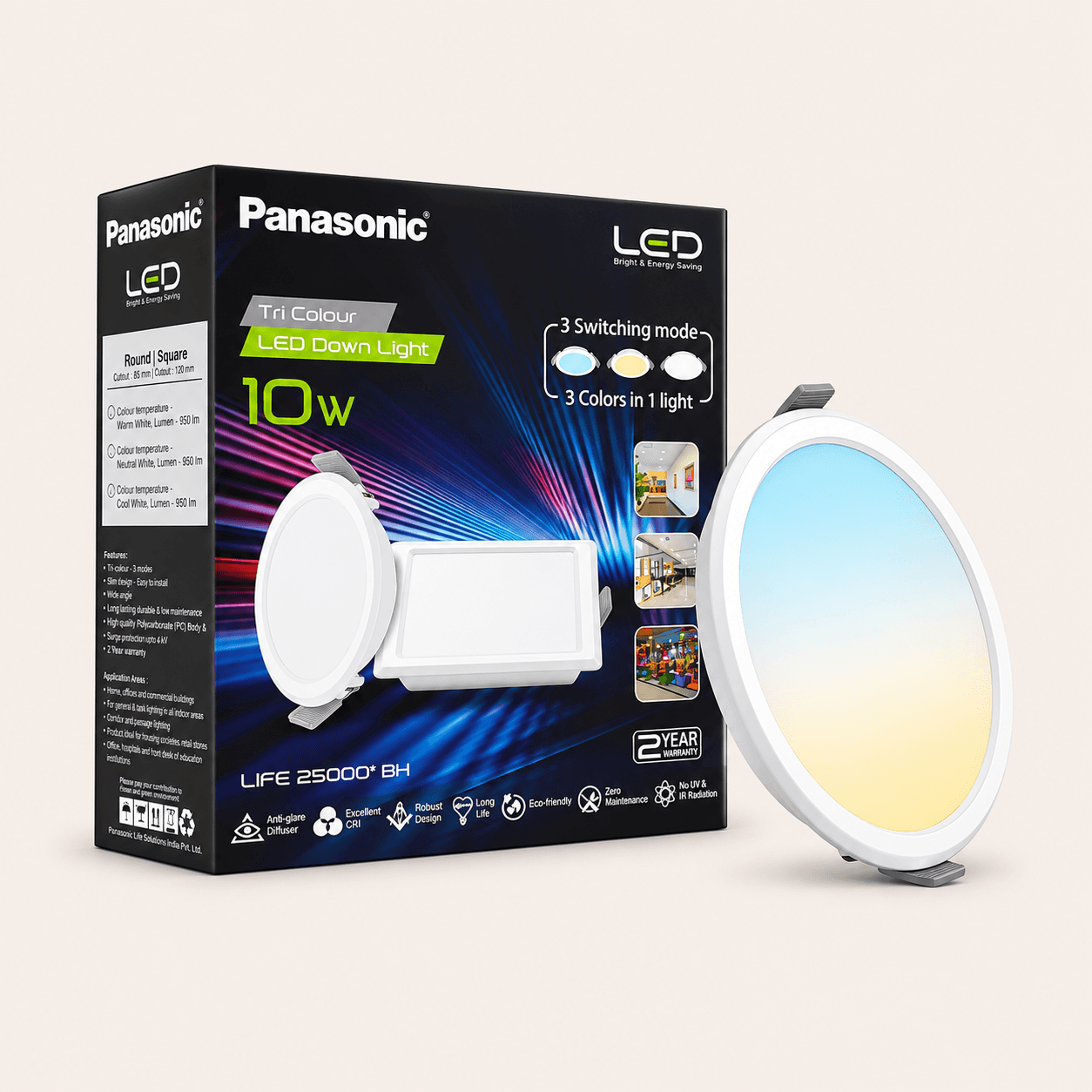
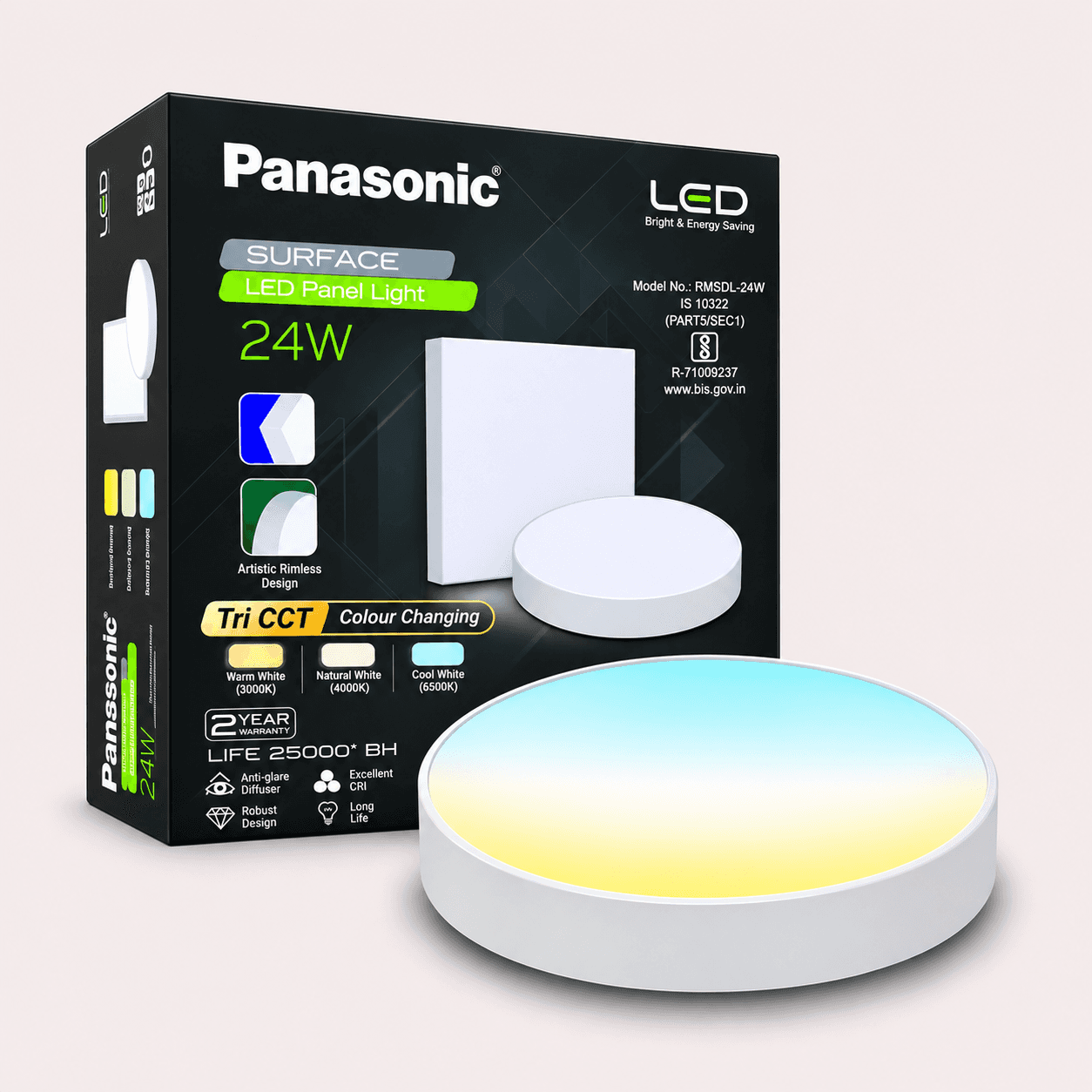
Concealed Light vs Surface Light vs Panel Light: Which Should You Buy?
By WireBolt Team · Updated · 5 min read
Quick answer
Choose a concealed light (a recessed panel) if the room has, or will have, a gypsum or POP false ceiling: it sits flush in a round cut-out and looks the neatest. Choose a surface light if there is no false ceiling: it fixes straight onto the slab with no cut-out, so it suits flats, rentals, renovations, shops and offices. A 'panel light' can be either kind; the word just means a flat LED light. For a typical 10 x 12 ft bedroom, plan three or four 10 to 12W concealed lights or one 18W surface light.
Walk into any lighting shop and you'll hear three names for what look like the same flat, round LED light: concealed light, surface light and panel light. They're not the same, and choosing the wrong one usually comes down to one question nobody asked: does the room have a false ceiling? Here's the difference, which to choose for each room, and how many you need.
The short answer
- False ceiling (gypsum or POP)? Choose a concealed light. It sits flush in a round cut-out, so only the flat face shows.
- No false ceiling (plain concrete slab)? Choose a surface light. It fixes straight onto the ceiling, with no cut-out.
- "Panel light" simply means a flat LED light. A concealed light is a recessed panel light; a surface light is a surface-mounted panel light.
Concealed light vs surface light at a glance
| Concealed light (recessed panel) | Surface light (surface panel) | |
|---|---|---|
| Needs a false ceiling | Yes | No |
| Cut-out in the ceiling | Yes, a round hole (e.g. 100 to 205 mm) | None |
| How it looks | Flush with the ceiling; only the face shows | Sits on the ceiling, a few centimetres deep |
| Best for | New homes with false ceilings, offices, showrooms | Flats without false ceilings, rentals, renovations, shops, offices |
| Changing it later | The new light must match the hole size | Any size fits; just cover the same point |
| Panasonic example | Anora Slim round panel | Rimless Surface round light |
When to choose a concealed light
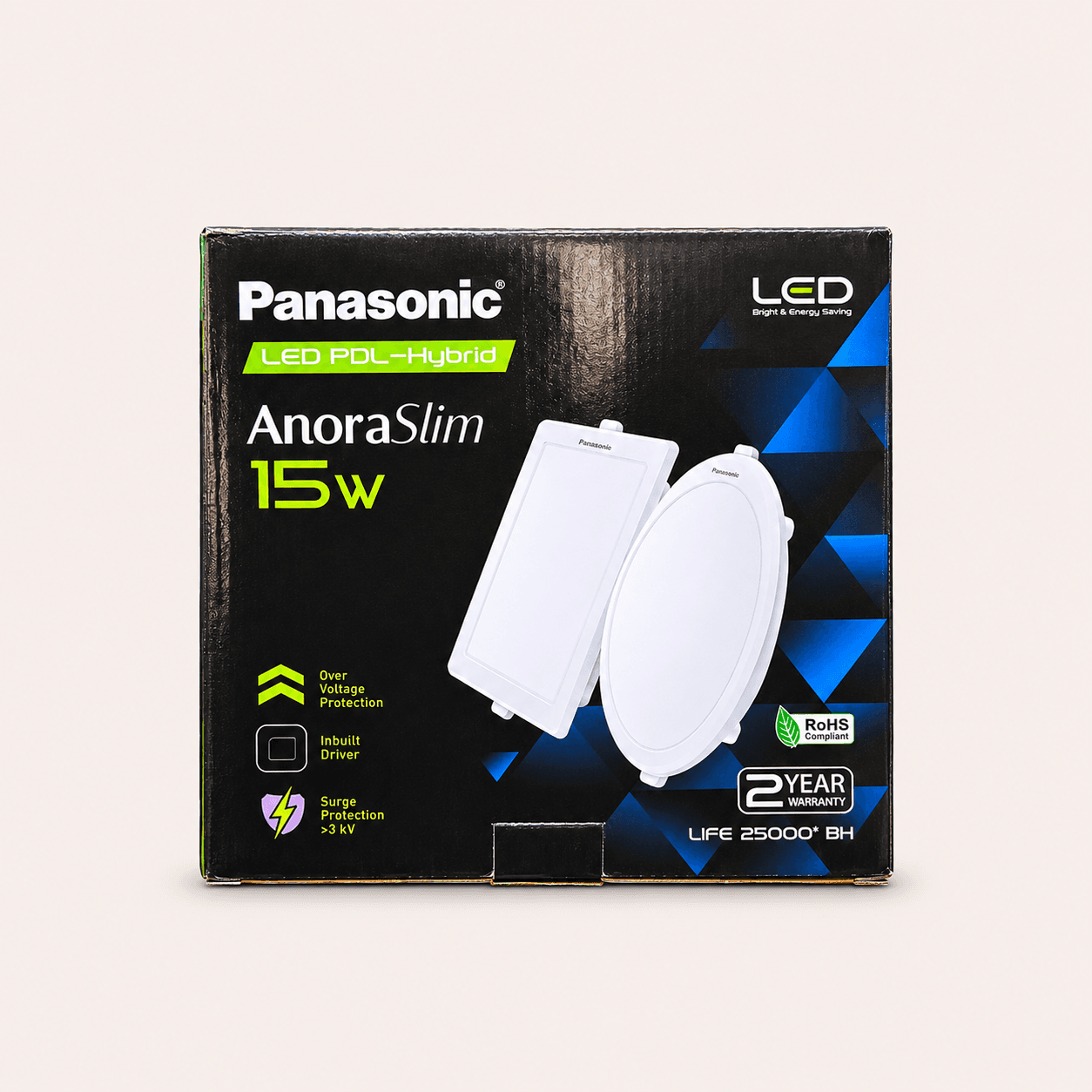
Concealed lights are the clean, modern look in homes with a gypsum or POP false ceiling. The light sits in a round cut-out; its rim covers the edge of the hole, and spring clips hold it in place. Because the false ceiling hides the wiring, you can place several smaller lights evenly across the room, which gives softer, more even light than one bright fitting.
Two things to plan:
- Cut-out size. Each wattage needs a specific hole. For the Panasonic Anora Slim, for example, 10W needs 100 mm (4 inch) and 15W needs 150 mm (6 inch). See the full concealed light cutting size chart, and always check the box before cutting.
- Depth. Slim panels like the Anora Slim are about 28 mm deep, so they fit shallow false ceilings, but leave room above the board for the wire and connector.
When to choose a surface light
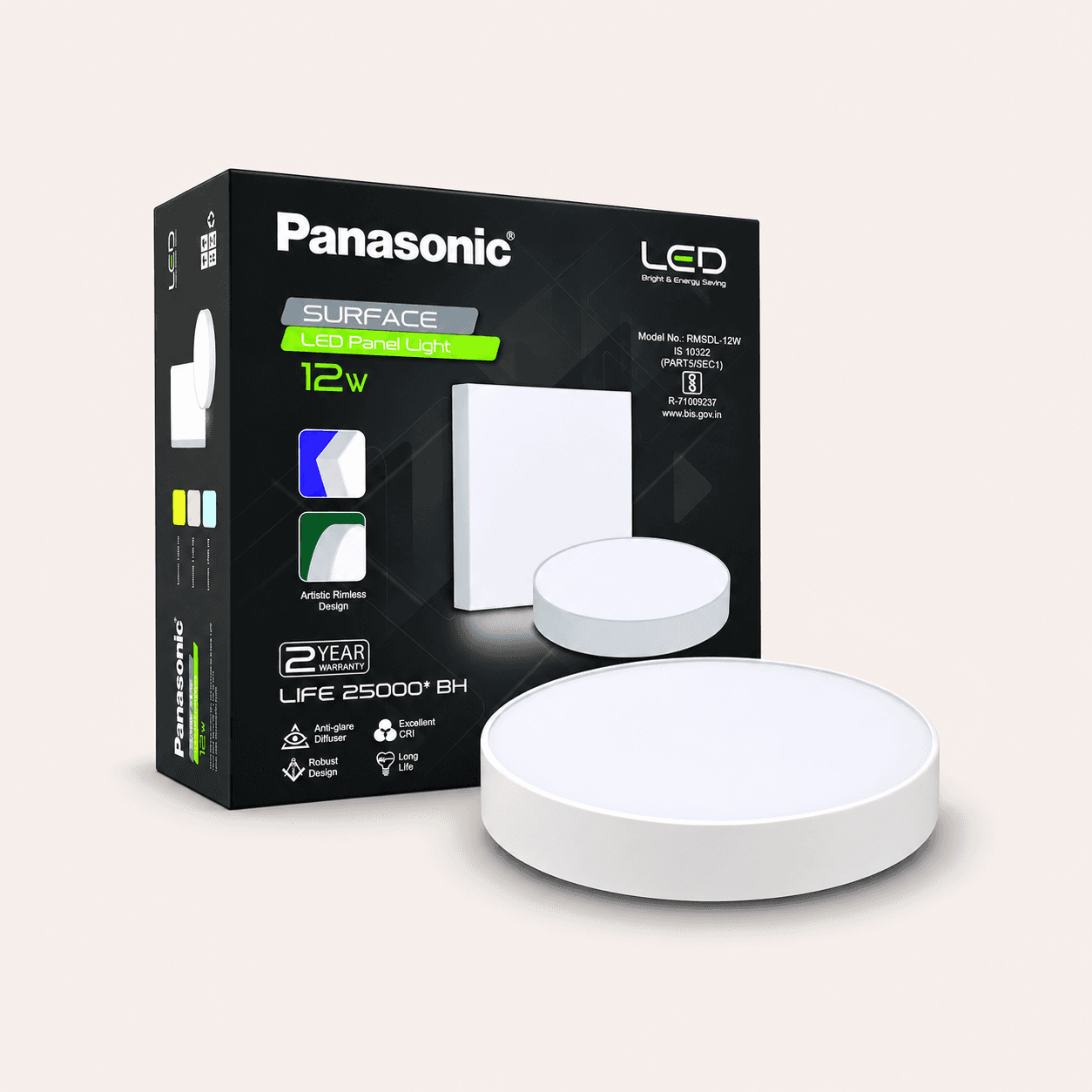
Many Bengaluru apartments are handed over without a false ceiling, and plenty of owners don't want one. A surface light is the answer: it screws onto the ceiling over the existing light point, with no cut-out, no false ceiling and no plastering. That makes it ideal for:
- flats and rental homes with plain slab ceilings,
- renovations, where you're replacing an old tube light or batten,
- shops, offices and godowns, where speed matters,
- bathrooms, balconies and passages without a false ceiling.
A rimless surface light, such as the Panasonic Rimless Surface, glows across its whole face with no visible frame, so it looks neat even on a plain ceiling. Panasonic sizes run from 100 mm across (6W) to 200 mm (24W), all 31 mm deep.
How many lights do you need?
These are practical rules of thumb for a standard 9 to 10 ft ceiling; your electrician or interior designer will fine-tune the layout.
| Room | Concealed lights (false ceiling) | Surface light (no false ceiling) |
|---|---|---|
| Passage, balcony, bathroom | One or two 10W | One 6W |
| Small bedroom or study (about 10 x 10 ft) | Two or three 10 to 12W | One 12 to 18W |
| Bedroom (about 10 x 12 ft) | Three or four 10 to 12W | One 18W |
| Kitchen | Two to four 12 to 15W | One 18W |
| Living room or hall | Four to six 15W | One or two 24W |
| Shop or office | 15 to 20W in an even grid | 24W, spaced evenly |
Spread several smaller lights rather than one very bright light. It gives even light with fewer shadows, especially on kitchen counters and study tables.
Which colour?
- Warm white (3000K): cosy and relaxed, for bedrooms and living rooms.
- Natural white (4000K): balanced, for kitchens, dining and study areas.
- Cool white (6500K): bright and crisp, for offices, shops and work areas.
Can't decide, or want different light at different times? A 3-in-1 (Tri-CCT) light gives all three in one fitting; see how 3-in-1 panel lights work. Both Panasonic ranges come in 3-in-1 versions: the Anora Slim Tri-CCT for false ceilings and the Rimless Surface Tri-CCT for plain ceilings.
Common mistakes
- Buying concealed lights for a room with no false ceiling. They need a hollow ceiling to sit in.
- Cutting the false ceiling before the lights arrive. Cut-out sizes differ between brands and wattages.
- One bright light in the middle of a big room. Even, spread-out light looks better and casts fewer shadows.
- Mixing colours in one room. Keep every light in a room the same colour, or use 3-in-1 lights throughout.
Buy concealed and surface lights in Bengaluru
WireBolt delivers original Panasonic lights across Bengaluru the same day, with a GST invoice on every order, so the electrician isn't kept waiting. Every Panasonic box we stock prints a 2-year warranty.
- False ceiling: Panasonic Anora Slim round panel or the 3-in-1 Anora Slim Tri-CCT
- No false ceiling: Panasonic Rimless Surface round light or the 3-in-1 Rimless Surface Tri-CCT
- See all LED lighting and Panasonic products.
This guide is general information for homes in Bengaluru. Electrical work should be done by a licensed electrician who can check your actual load, wiring and supply. Last checked 28 November 2026.